
MATSYASANA
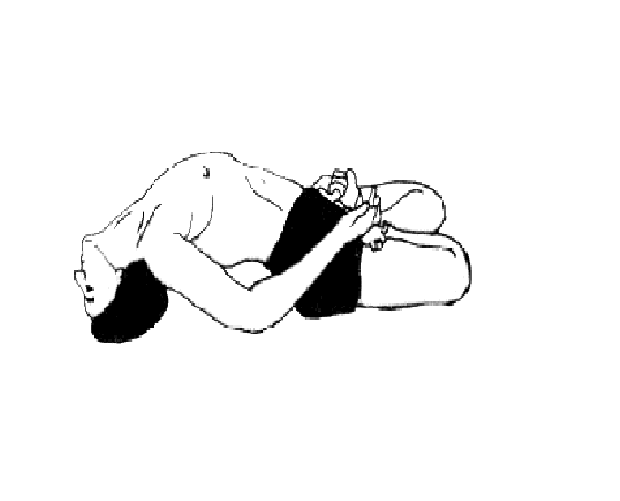
Matsyameans fish in Sanskrit. The way of folding the legs in matsyasana resembles the tail of a fish, while the rest of the body represents its body and head
• Sit in padmasana and relax the whole body.
• Carefully bend backward, supporting the body with thearms and elbows.
• Lift the chest slightly, take the head backand lower the crown of the head to the floor.
• Hold the big toes and rest the elbows on the floor.
• Adjust the position of the head so that the maximum archof the back is attained.
• Relax the arms and the whole body, allowing the head, buttocks and legs to support the weight of the body.
• Close the eyes and breathe slowly and deeply.
• Return to the starting position, reversing the order ofmovements.
• Repeat the asana, with the legs crossed the other way.
Breathing: Breathe deeply and slowly in the final position.
Duration: The final position may be held for up to 5 minutes, although I to 3 minutes is sufficient for general health.
Awareness: Physical – on the abdomen, chest, neck and head or breath.
Spiritual – on manipura or anahata chakra.
Sequence:Halasana or sarvangasana are the ideal counterposes as they stretch the neck in the opposite
direction,releasing any muscular tension.
Contra-indications: People who suffer from heart disease,peptic ulcers, hernia, back conditions or any
serious illnessshould not practise this asana. Pregnant women shouldalso not attempt
it.
Benefits:
• This asana stretches the intestines and abdominalorgans and is useful for all abdominal ailments.
• To removeconstipation, drink 3 glasses of water and then performthis asana.
• It also relieves inflamed and bleeding piles.
• This practice is very good for asthma and bronchitis asit encourages deep respiration.
• It recirculates stagnantblood in the back, alleviating backache.
• It regulates thefunction of the thyroid gland and stimulates the thymusgland, boosting the immune system.
• The pelvic region is given a good stretch and the pressureof the feet on the thighs greatly reduces blood circulationin the legs, diverting it to the pelvic organs.
• Youthfulnessand vitality are increased.
Practice note: It is important that the body is slowly loweredinto and raised from the final position by using
the elbowsas a support. The movement should be performed withcontrol and care as it is
very easy to injure the spine.